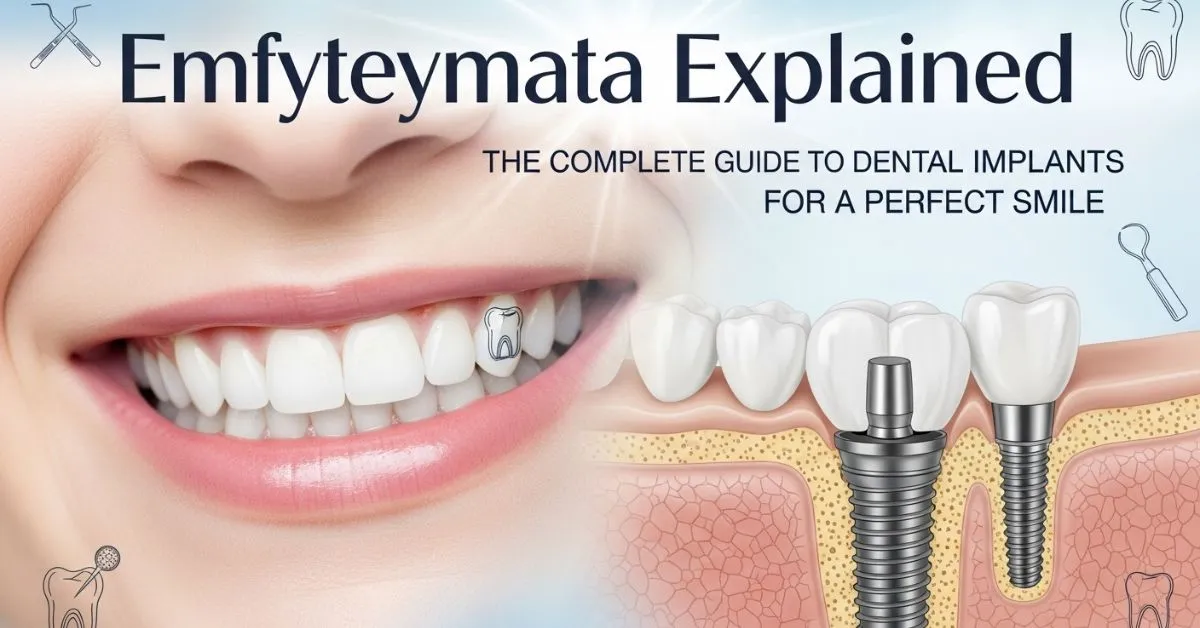
One of the most common ways to replace lost teeth is with dental implants, which are also called emfyteymata. They make people able to eat, talk, and smile with confidence by restoring both function and appearance.
Implants are permanent and feel normal because they are fused directly with the jawbone, unlike bridges or dentures.
Emfyteymata method is safer and works better than ever thanks to modern dentistry. People of all ages are picking it to keep their faces looking good and improve their oral health. Before making a choice, it’s important to know about the dental implant treatment, how much it costs, and how long it takes to heal.
We will talk about everything about this treatment in this book. You will learn about the different kinds, how to do them step-by-step, the pros and cons, and how to keep them in good shape. We will also talk about new ideas, how patients feel, and cost issues. By the end, you’ll have a good idea of how this dental answer can make your life better and your oral health better.
Understanding Dental Implants
Definition and Purpose
When put in the jawbone, this tooth replacement option works like a fake root. Emfyteymata holds crowns, bridges, or teeth in place. Getting rid of missing teeth easily is its main goal.
Implants give you a stable base for speaking and eating. In contrast to removable teeth, they don’t slip or hurt. They also help keep your jawbone strong.
Components Of Emfyteymata
Most implants are made up of three parts. The post is put into the jawbone. It is usually made of titanium. The abutment joins the post to the crown, which is the tooth that you can see.
Together, these parts make the structure stable and give it a natural look. The crown is made and colored to match the teeth that are next to it. Long-term success is guaranteed by proper blending.
Types
When you put in an endosteal implant, it goes right into the bone. Subperiosteal implants rest on the bone for people who aren’t tall enough. Zygomatic implants are used when there is a lot of bone loss in the upper jaw.
The mini implants are smaller and require less surgery. Some full-arch systems can replace more than one tooth at the same time. The type chosen is based on the patient’s wants and the shape of their jawbone.
Who Is a Candidate
General Requirements
This dental treatment is not safe for everyone. The patient must be in good health all around and have healthy gums. It is important that the jaw has enough bone mass.
Being an adult of any age is okay, but it may matter. Adults-to-be should wait until their jaws are fully grown. Some physical conditions may need more testing.
Conditions Affecting Eligibility
Having a long-term illness like diabetes or osteoporosis can make it harder to heal. Smoking can make it harder to succeed. Not taking care of your teeth properly raises the risk of problems.
There are times when bone replacement is necessary. A dentist checks out each customer individually to make sure they are a good fit.
Pre-Procedure Evaluation
X-rays or CT scans help figure out where to put the screws and measure the jaw. The bite and teeth around it are checked. Long-term success is more likely if you plan well.
The Procedure Step by Step
Initial Consultation and Planning
The first step is to see a dentist. To check the jawbone, imaging is used. Based on what the patient needs, a unique treatment plan is made.
It costs money and takes time to heal, the doctor says. There are answers to questions about how this medicine works. Careful planning makes the process go more smoothly.
Tooth Extraction
If a damaged tooth is present, it may need to be removed. The site is prepared for placement. Healing may take several weeks before the next step.
Implant Placement
Surgery is used to put the post into the jawbone. People are sedated or given local anesthesia. The implant needs to osseointegrate, which means it needs to become one with the bone.
Abutment Placement
The abutment is connected after it has been integrated. This is what holds the implant to the crown. Before the final fitting, the gums heal around the abutment.
Crown Placement
The final tooth is fitted onto the abutment. It is shaped and colored to match surrounding teeth. Adjustments ensure a proper bite and comfort.
Recovery and Aftercare
Healing Timeline
After surgery, the jaw needs some time to heal. Most of the time, osseointegration takes a few months. This makes the base for the crown stable.
Managing Pain and Swelling
A lot of people have mild pain or swelling. Dentists say to use ice packs or pain killers. Following the steps helps the body heal faster.
Oral Hygiene
Emfyteymata is important to keep the mouth clean. Infections can be avoided by brushing and washing gently. Hard or sticky foods should be avoided while the wound is healing.
Follow-Up Care
For healing and security, regular check-ups are important. To make sure of merging, X-rays may be used. Implants last for many years if they are taken care of regularly.
Benefits
Natural Appearance and Comfort
The new tooth feels and looks like a real one. It doesn’t stand out from the other teeth. Patients feel free to smile and talk.
Improved Function
Emfyteymata safe to chew and bite again. It does not slip like removable teeth do. The process of eating is made easier and faster.
Durability
With the right care, implants can last for many years. The titanium posts are strong and stable. They can be used for a long time to replace lost teeth.
Bone Preservation
They keep the jawbone strong and stop it from breaking down. The shape of the face is kept. It helps keep your gums and teeth healthy.
Confidence Boost
Implants make you feel better about your own self-worth. People can easily talk, eat, and smile. The overall quality of life gets better.
Risks and Potential Complications
Infection
Around the implant place, an infection could happen. With good oral care, this chance goes down. If needed, dentists can give you medicines.
Failure
The implant doesn’t always connect with the bone. The risk goes up if you smoke, have bad bones, or have health problems.
Nerve or Tissue Damage
Surgery can leave you numb or in pain for a short time. A lot of planning can lower this risk.
Sinus Problems
Sinuses may be affected by devices in the upper jaw. There may be a need for a sinus lift. This keeps things stable and comfortable.
Other Risk Factors
Sinuses may be affected by devices in the upper jaw. There may be a need for a sinus lift. This keeps things stable and comfortable.
Cost and Insurance
Average Cost
The cost depends on the materials used and the dentist’s level of skill. Costs go up when more treatments are done. Location also changes the cost of things.
Insurance Coverage
A number of dental plans will pay for part of the treatment. Coverage is very different. Always check with your insurance company.
Cost vs Long-Term Benefits
Implants are expensive at first, but they last a long time. They keep you from needing more dental work in the future. A lot of people think it’s worth the money.
Innovations and Advanced Techniques
Mini Implants
Not as strong and not as big. Not as much time to heal. This is great for people who don’t have a lot of bone.
Immediate Load
Furthermore known as “teeth in a day.” The crown is put in soon after surgery. Patients quickly recover their abilities.
Computer-Guided Surgery
Software plans the exact spot. Lowers risks and makes things better.
3D Printing
Used to make caps and guides for surgery. Guarantees a great fit. Makes processes work better.
Comparisons
Implants vs Dentures
Permanent vs. taking off. There was no slipping or pain. Dentures might need to be fixed.
Implants vs Bridges
Bridges rely on adjacent teeth. Implants stand alone and preserve healthy teeth. Last longer than bridges.
Pros and Cons
Implants last longer, look more realistic, and cost more. Dentures are less stable but cheaper. Bridges are the middle choice, but they might hurt healthy teeth.
When Implants Are Preferred
Best for people who are missing one or more teeth. Ideal for having enough jaws. Provides stability and performance over time.
Longevity and Maintenance
How Long
With the right care, it can last 20 years or more. Titanium posts make them strong. Regular check-ups make sure that things last.
Daily Care
Every day, brush and floss. Don’t use toothpaste or brushes that are too hard. Rinses that kill germs help keep you from getting sick.
Protecting Implants
Do not chew on hard things. Night guards can stop damage from grinding. Long-term risk is lower when you follow the directions.
Professional Maintenance
Regular dentist visits clean hard-to-reach areas and check for stability. Helps implants last longer and keep your mouth healthy.
Patient Experiences
Real-Life Stories
Patients feel better about eating and happy again. Recovery is possible. There are different experiences, but most of them are good.
Pain Management
Pain is generally not too bad. Taking over-the-counter or prescription drugs can help. Following the care directions makes pain go away.
Success Rates
Over 95% of the time, this number is very high. Care that is right is necessary. Long-term results are good for most people.
Common Concerns
Some worry about the cost or the return. Some are afraid of surgery. Teaching patients makes them feel less anxious.
Common Myths
Implants Are Painful
Local anesthesia minimizes discomfort. Most report only mild soreness.
Implants Don’t Last
If you take care of them, they will last for decades. Titanium is used to make it. Regular dentist visits help people live longer.
Too Expensive
Long-term answer that costs a lot up front. Cuts down on future dental work. An investment that is good for your health and confidence.
Conclusion
Dental implants, also known as emfyteymata, are a good way to replace lost teeth. They improve performance, looks, and self-esteem. They can last for decades if you take good care of them. The process is safe and works very well for most people. Long-term success depends on getting regular checkups and taking care of your teeth. Getting implants can make your mouth health and quality of life a lot better.