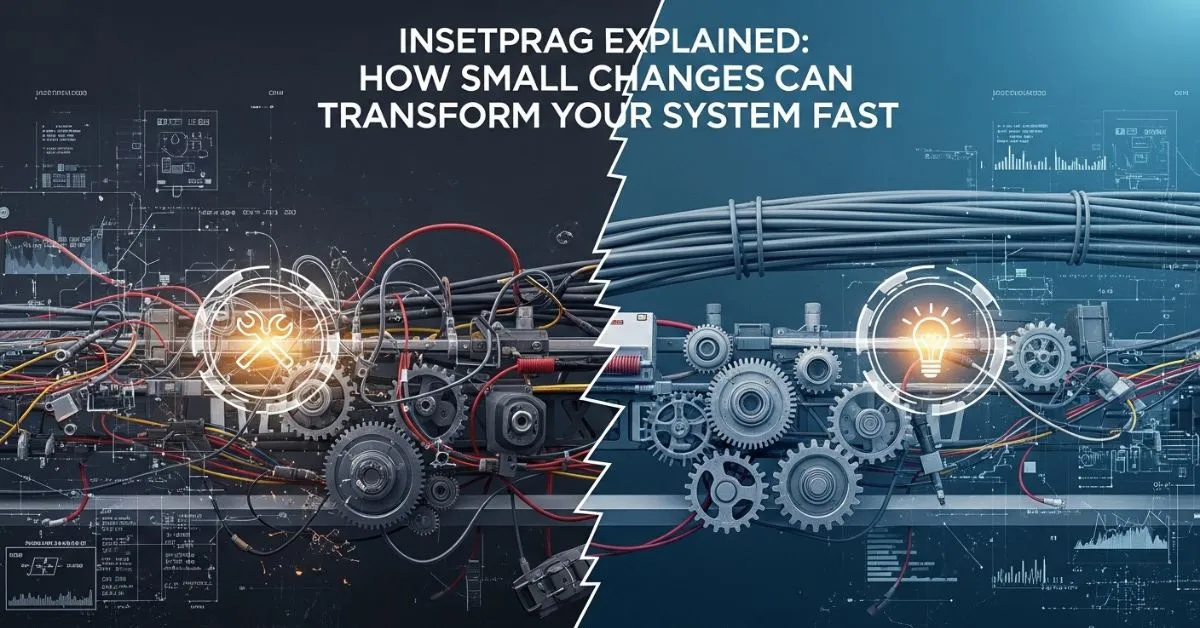
Change happens all the time, but not every change needs a full rebuild. Many companies have old systems that are slow, expensive, or hard to manage. The Insetprag framework helps improve systems without replacing everything. Small changes can make a big difference and keep work running smoothly.
What Are Small Improvements?
Small improvements are tiny, simple changes inside an existing system. They make the system work better without stopping daily operations. Teams can apply them step by step and see results quickly. This is a safe and practical way to improve systems over time.
Simple Idea
The main idea is to add small changes that are helpful and realistic. These changes focus on results rather than trying to be perfect. Step by step, these small improvements add up over time. Teams can gradually improve systems without feeling overwhelmed or stressed.
Why Small Changes Matter
Big changes are expensive and take a long time to finish. Many projects fail because they try to change everything at once. Small improvements are faster, safer, and easier for teams to accept. They also help teams learn and adapt as the system improves gradually.
Modern Problems
Old systems, low budgets, and complex workflows make full changes very hard. Small improvements solve these problems one step at a time. They allow daily work to continue while upgrades happen. This makes improvements easier and safer for everyone involved.
Main Rules
Understand First
Always study the system before making any changes. Knowing how parts connect prevents mistakes. This helps focus changes where they will work best. Teams can make better decisions and improve results efficiently.
Easy Changes
Choose improvements that are simple and realistic. Don’t wait for perfect ideas that may never happen. Small, easy changes provide results quickly. This keeps progress moving and teams motivated to continue.
Small Focused Changes
Focus on changing one thing at a time for the biggest impact. Avoid trying to fix everything at once. Step by step, small changes build confidence and show results. This is the core idea of incremental improvement strategy.
Test and Improve
Try changes first and see if they work in real life. Use the results to improve and adjust the process. Step by step, improvements get better over time. Teams can make continuous progress without big disruptions.
Keep Work Going
Make sure daily work continues while changes happen. Small steps make it easier for teams to accept improvements. Operations stay smooth, and teams stay productive. This approach reduces resistance to change and keeps progress steady.
How Insetprag Works
Find Important Areas
Pick the parts of the system that will benefit most from improvement. Small changes in the right areas give the biggest results. Focus time and resources on these high-impact areas. This ensures improvements are effective and efficient.
Compare Before and After
Look at how the system works now and how it will improve. Small changes add up over time to create bigger results. Teams can clearly see the difference between before and after. This encourages more adoption of changes in the future.
Easy Example
Think of upgrading a car slowly instead of replacing the engine. Improve small parts like tires or software one at a time. Each step increases performance without stopping the system. Step by step improvements are safer and easier to manage.
Step by Step
Step 1: Look at System
Find the problem areas in the system carefully. Study how all parts work together. This stops mistakes when making improvements. Good understanding is the first step to success.
Step 2: Pick Change
Choose the most important changes first. Quick wins give teams confidence and motivation. Small successes build momentum for bigger improvements. Step by step changes are easier to manage.
Step 3: Plan Simple
Keep all ideas simple and practical. Don’t make solutions too complex. Simple improvements are easier to test and measure. They give fast and safe results.
Step 4: Do Slowly
Change one thing at a time. Test each step carefully before adding more changes. Small steps prevent mistakes and reduce risk. Step by step changes lead to lasting improvements.
Step 5: Check Results
See if the change worked by using data and feedback. Measure progress to understand what works best. Use this information for future improvements. Tracking results ensures continuous growth and better decisions.
Step 6: Repeat
If a change works, apply it to other parts of the system. Repeat the same process for all needed areas. Step by step, the whole system improves. Gradual improvements lead to long-term success.
Where It Works
IT Systems
Improve old software slowly instead of replacing it. Automation or small updates can increase performance. Small improvements save time and money. This is a low-risk way to make old systems better.
Business Work
Change business workflows slowly to improve efficiency. Save time and reduce errors with small changes. Teams work better without disruption. Small improvements show results quickly and safely.
Startups
Test new ideas with small improvements. This reduces costs and risks in early stages. Teams can learn fast from each change. Small steps help startups grow steadily.
Schools
Update lessons and programs slowly to improve learning. Students get better results step by step. Teachers can test improvements before full use. Small changes build a culture of learning gradually.
Cities
Upgrade city infrastructure in small steps to reduce problems. Work continues while improvements happen. Each step adds value and efficiency. This is a safe way to improve cities over time.
Environment
Make energy-saving changes slowly and steadily. Small upgrades save money and resources. Little improvements add up to big results. This supports sustainable and eco-friendly practices.
Benefits
- Low Cost: Small changes are cheap and affordable.
- Fast Results: Teams see improvements quickly.
- Low Risk: Small steps avoid big mistakes.
- Easy to Accept: Teams accept small changes easily.
When to Use
- Old systems that cannot be replaced
- Projects with low budgets or limited resources.
- High-risk areas where mistakes are costly.
- Teams that resist large-scale changes.
When Not to Use
- Systems that are completely broken.
- Projects that need full redesign or overhaul.
- Cases with strict rules or regulations.
- Systems without proper tools to measure results.
Common Mistakes
- Making small improvements too complex.
- Ignoring connections between parts of the system.
- Not measuring results properly.
- Changing too many things at once.
Compare With Other Ways
- Full Rebuild: Expensive and risky.
- Agile: Mostly software-focused, incremental changes work everywhere.
- Lean: Focuses on efficiency, small changes focus on high impact.
- Step by step improvements complement these methods.
Tools
- Use data to track improvements.
- Automate simple tasks to save time.
- Test changes before applying fully.
- Collect feedback from users and teams.
How to Start
- Pick one small improvement first.
- Apply it slowly and carefully.
- Check results and adjust as needed.
- Repeat the process in other areas.
Future
- Works well with AI and automation.
- Helps both small and large companies grow.
- Works with agile, lean, and other methods.
- Supports sustainability with small, steady improvements.
Conclusion
Small changes can create big results over time. They are safer and cheaper than trying to redo everything at once. Teams can keep working while improvements happen, so nothing stops. By starting with one small change and slowly building on it, you can improve systems in a steady and lasting way.