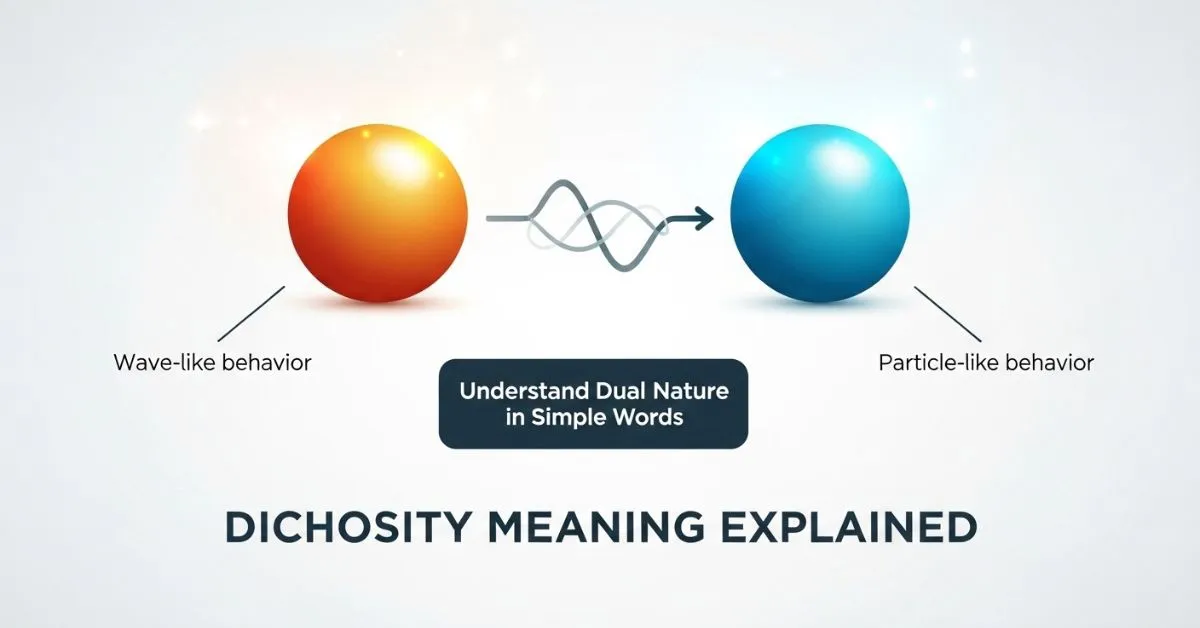
Having two opposite sides, or a dual nature, is what dichosity means. People generally mean the way something can be in two different forms at the same time when they talk about dichosity. Understanding this idea helps people get a better picture of how people act, think, and make choices. This idea shows up in science, writing, philosophy, psychology, and even science.
Disagreements happen all the time, and we don’t even realize it. It is possible for someone to be both emotional and rational, or for something to be both successful and unsuccessful at the same time. Seeing two sides of something helps us understand how complicated decisions are and how people are. This idea also helps explain why some people think the world is black and white when it’s really more like shades of gray.
You will easily understand this interesting idea after reading this piece, which looks at examples, types, and uses of dual qualities. You will learn how to find ideas that are different from each other, understand parts that are different, and use what you’ve learned in real life.
Meaning of Dual Qualities
Definition of Two-Part Division
Having dual traits means having two opposing sides to you or a nature that is split up. It shows that the same thing can take on different shapes at the same time. This makes Dichosity easier to understand complicated ideas.
Origin of the Concept
The thought comes from splitting something into two main parts. There are philosophical and logical roots to this idea, which is linked to binary opposition. Scholars have used Dichosity to talk about different ways of thinking and acting.
Importance of Understanding Dual Aspects
Understanding these two sides helps us figure out how people think and make choices. It makes it easy to see things that are different from each other. This is helpful in science, writing, philosophy, psychology, and more.
Understanding Opposing Aspects in Simple Words
What Opposing Aspects Really Mean
This idea means having two sides or traits that are opposite each other at the same time. Dichosity shows that a person, an idea, or an event has two sides. This makes complicated ideas easier to understand.
How Dual Aspects Appear
Thoughts, choices, and actions can all have opposite sides. You can be both emotional and reasonable at the same time. Success and loss can happen at the same time in some situations.
Difference Between Opposing Aspects and Simple Contrast
Not every difference is a real dual quality. Contrast shows how something is different, but opposite aspects always show two traits that are at odds with each other or work well together. Realizing this makes analysis and critical thought better.
Examples of Dual Qualities
Everyday Life Examples
In everyday life, we often see two sides to things. Dichosity possible to be happy and worried at the same time. Situations can have both success and failure at the same time.
Social Examples
In many ways, society has different sides. As an example, chances may show who is rich and who is poor. Here’s another example: traditional vs. new ways of living.
Psychological Examples
In psychology, identity and thought both have two sides. Depending on the situation, people can be both shy and outgoing. They may also have both logical and emotional sides at the same time.
Dual Aspects in Different Fields
Philosophy
In philosophy, opposite traits explain why thoughts have two sides. Thinkers use Dichosity to look at the opposites of moral and ethical ideas. Mind vs. body or good vs. bad are two examples.
Psychology
In psychology, knowing how different qualities work together helps explain how people act and think. People can be both emotional and sensible at the same time. Researchers look at these to learn more about psychology and how people make decisions.
Literature
Dual traits are used by writers to make stories interesting. Different characters can have different traits, like a hero vs. an evil. These different traits cause stress and conflict.
Science
In science, classification and analysis are two examples of dual traits. Living and nonliving things or particle-wave duality are two examples. Using logical division, Dichosity helps put facts in order.
Types of Dual Aspects
True Opposing Aspects
There are true dual qualities when two traits are completely different from each other. There isn’t a middle ground. One clear difference is between “alive” and “dead.”
False Opposing Aspects
When a situation is oversimplified into two extremes, false dual traits show up. There may be a lot of options in between, though. For instance, if you think you are either great or unsuccessful, you don’t see the middle ground.
Logical Division
You can use logical division to think and solve problems. Dichosity divides ideas into two clear parts that are easier to understand. Philosophies, sciences, and structured thought all use this a lot.
Comparing Dual Traits with Similar Concepts
Dual Aspects vs Duality
Duality and dual traits are similar but not the same. Dual traits show that the same thing has two different sides. Duality shows that there are two parts that can live together without always being at odds with each other.
Dual Aspects vs Contrast
Contrast brings out differences, but not always traits that are opposites. Dual traits always have features that are either opposites or opposites of each other. Knowing this helps you figure out how to explain complicated thoughts.
Dual Aspects vs Binary Thinking
When you think in binary, you see things as having only two choices. Dual traits show that an idea or thing is naturally dual. Dual traits clearly look at qualities that are opposite to each other, while binary thought might miss middle ground.
Advantages of Recognizing Dual Qualities
Simplifies Complex Ideas
Figuring out how different things are makes difficult topics easier to understand. Putting thoughts into two opposite parts helps people understand them more quickly. Dichosity makes things clearer and less confusing.
Helps in Decision-Making
Being aware of two parts makes choices better. Dichosity easy to make a choice when there are two clear sides. Different things can be weighed in a reasonable way.
Improves Communication and Learning
Using traits that are opposites helps make things simpler. When things are different, they are easier to understand and remember. In class, when writing, and in conversations, this helps.
Problems with Oversimplifying Dual Traits
Oversimplification
It’s not always helpful to see things from only two sides. There are often a lot of options in real life between the two extremes. Ignoring middle choices leads to confusion.
False Choices
People sometimes think they have only two choices. The choice here is not true. Dichosity can cause people to make bad choices.
Social and Psychological Issues
Extreme thinking can lead to disagreements and stress. Dichosity could be bad for marriages. Thinking too far out of the box also makes worry and mental pressure worse.
Real-Life Applications of Dual Traits
Decision-Making
Using two traits at the same time helps you make decisions. Focusing on two opposite factors makes tough choices easier.
Education
Different traits are used by teachers to successfully explain topics. Students learn things faster when they are broken down into two main parts.
Personal Development
Knowing that you have two sides to you makes you more self-aware. Keeping your emotional and rational sides in check helps you grow as a person.
How to Recognize and Apply Dual Aspects Properly
Identify Two Clear Aspects
Find two things that are different about any idea or event. This helps you better understand ideas. The way you think gets more organized.
Avoid False Divisions
There are more than two sides to every story. False dichotomies can make choices wrong. Always look at alternatives or middle possibilities.
Consider Multiple Perspectives
Look at issues from various points of view. There are more than two sides to this. Multiple points of view help people understand and find answers.
Why Understanding Dual Traits Matters
Improves Critical Thinking
Critical thinking skills are improved by noticing things that are different. Dichosity helps you see clearly how different things work. This helps you figure out problems faster.
Helps Analyze Arguments
When you look at two sides of a debate or talk, you can see its pros and cons. Dichosity helps you think and talk to others better.
Useful in Various Fields
In science, literature, philosophy, and psychology, having two traits is important. They help explain different thoughts and make hard topics easier to understand.
Conclusion
Having two opposite sides, or a dual nature, is what dichosity means. Seeing two sides of a thing helps you understand different ideas and make complicated ideas easier to understand.
Seeing two sides of something helps you make decisions and think critically. Dichosity helps people escape false dichotomies and see things from different points of view.
We can go beyond black-and-white thought if we understand traits that are opposite to each other. Seeing that people, ideas, and events have two sides to them helps us think in a balanced and thoughtful way.